

Choosing the Right Foundation for Your Custom Home in Dallas-Fort Worth
Why Early Decisions Matter in DFW Housing Market
Describe how DFW is expanding in all directions. Custom homes are being built in areas that were once considered “rural”. Protect your investment, choose the right foundation for your custom home build in DFW. It’s the most important part of any construction project.
This makes it a great time for future homeowners to plan their custom home with confidence. Below, we’ll explain how to choose the right foundation for your Dallas-Fort Worth home, covering key factors like soil conditions, budget, and long-term value.
How the Right Foundation Impacts Your Custom Home
Making the right decision early helps you avoid issues and build with confidence.
Key advantages
- Supports your home design and floor plans from the start
- Helps control costs and reduce future repairs
- Adds long-term value to your custom home
Home Foundation Types in DFW
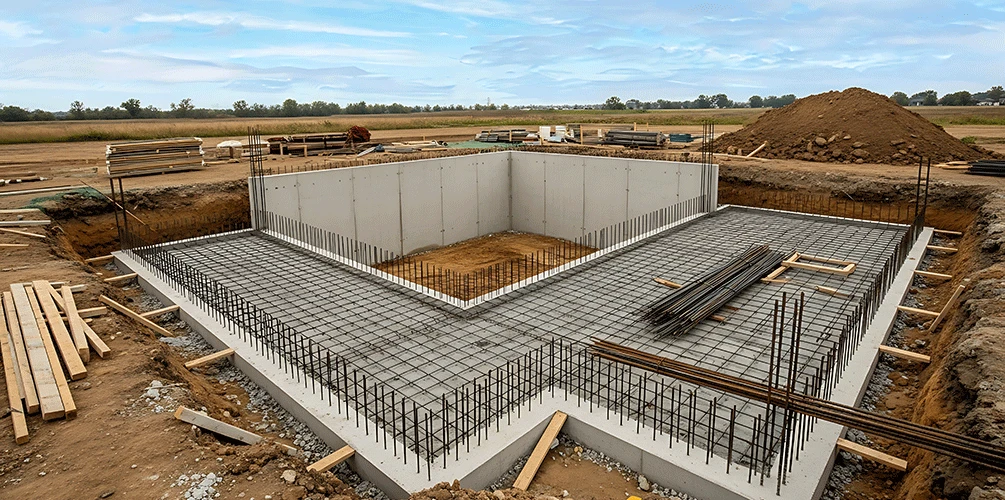
Understanding your foundation options is an important part of custom home building in Dallas-Fort Worth. The right choice depends on your topography, soil conditions, home design, and overall project goals, and it helps ensure your custom home lasts.
Slab-On-Grade Foundation
A slab foundation is the most common option for custom homes in DFW because it supports efficient construction and works well with many floor plans. It is poured directly on a structural pad, making it a practical choice for many home builders. Post-tension and rebar are the most common types of slab-on-grade foundations in DFW.
Why homeowners choose it:
- Lower cost for custom home projects
- A faster way to build homes on flat land
- Works well with most home plans and layouts
Best for:
- Flat land in suburban and rural communities
- Outside the floodplain
- Projects focused on budget and efficiency
Pier and Beam
Pier-and-beam foundations raise the house above ground, creating space underneath. This option is often used in custom-built homes in floodplains or extreme topography where site conditions require added support and flexibility.
What makes it a strong option:
- Easier access to plumbing and interior systems
- Better performance in flood prone areas
- Supports future custom home remodeling or renovation
- Can help manage soil movement and improve stability
Best for:
- Properties with elevation changes or higher pad requirements
- Homes being built in or near floodplains
- Builds that take up a considerable amount of the lot
Structural Slab (Void Boxes)
A structural slab with void boxes is designed to handle soil movement, making it a strong option for custom homes in areas with expansive clay soil like DFW. It is built to reduce pressure from shifting ground while supporting long-term stability.
Why consider it:
- Performs well in areas with high soil movement
- Reduces the need for extensive site excavation
- Supports long-term durability for custom-built homes
Best for:
- Land with highly expensive soil conditions
- Custom home projects focused on structural stability
- Owners are looking for a long-term solution despite the higher cost
When comparing foundation types, it’s important to consider cost, long-term durability, and maintenance requirements. Some options may cost more upfront but perform better in DFW’s soil and climate, helping you avoid future repairs and keep your custom home in good condition.
What to Consider Before Choosing a Home Foundation in Dallas-Fort Worth
Every custom home project in Dallas-Fort Worth is unique. Choosing the right foundation depends on local conditions, your lot, and your home design. Understanding these factors early helps ensure long-term stability and performance.
Expansive Clay Soil
DFW is known for its expansive clay soil, which expands and contracts with moisture changes. This movement can cause foundation shifting if not properly addressed. A geotechnical soil test is essential to determine the right foundation system for your property.
Lot Conditions and Elevation
From flat suburban developments to rural acreage, lot conditions vary across North Texas. Grading, elevation changes, and soil composition all impact drainage and the type of foundation your builder may recommend.
Drainage and Flood Risk
Heavy rains and occasional flooding in parts of DFW make drainage a key consideration. Homes in low-lying or flood-prone areas may benefit from elevated or pier-and-beam foundations to help manage water exposure.
Heat and Moisture Fluctuations
North Texas experiences intense summer heat and periods of drought followed by heavy rain. These cycles can stress foundations over time, making proper design, moisture control, and drainage critical.
Budget and Construction Costs
Foundation choices directly impact your overall budget. In DFW, where construction costs remain significant, selecting the right foundation early can help prevent costly repairs and changes later in the build process.
Home Design and Structural Needs
Your floor plan, square footage, and architectural features all influence foundation requirements. Larger homes or custom layouts may require reinforced systems to ensure proper load support.
Structural Complexity
Complex home designs with multiple levels, large spans, or unique shapes often need more advanced foundation solutions. Reinforcements like post-tension slabs or pier systems are commonly used in DFW to improve durability and performance.
Picking the Right Foundation for Your Dream Home
Choosing the right foundation is a step-by-step process that aligns your land, budget, and design goals. Taking a structured approach helps ensure your custom home project stays on track.
Steps to Choose the Right Foundation
- Evaluate Your Land: Understand soil conditions, drainage, and location to determine what foundation options are viable
- Define Your Home Plans and Lifestyle: Your home plans should reflect your lifestyle, family needs, and long-term goals, including how space and features will be used
- Compare Foundation Options: Examine the advantages, costs, and performance of each option to find the right balance between durability and budget
- Consult with Experts: Work with experienced custom home builders to access expertise, tools, and guidance while ensuring compliance with local building codes
- Align with Your Vision: Choose a foundation that supports your dream home and aligns with your design inspiration and long-term plans
Frequently Asked Questions
How much does it cost to build your own custom house?
The cost of a custom home depends on location, materials, design, and foundation type, and foundation type is a key factor that affects the total price. Choosing the right foundation early helps control cost and avoid expensive changes later in your project.
How to build a custom house?
Start by evaluating your land and soil, then create detailed custom home plans that match your lifestyle and design goals. A strong foundation plan is one of the first steps to ensure your home is built correctly from the ground up.
How long does it take to build a custom house?
Most custom home building projects take 8 to 14 months, depending on size and complexity. Foundation work is one of the earliest phases and can affect your overall timeline if not planned properly.
Are custom homes more expensive?
Custom homes can have a higher upfront cost, but they offer better control, design flexibility, and long-term value. Choosing the right foundation helps prevent costly repairs and improves durability over time.
Can you negotiate prices with a custom home builder?
Yes, many home builders are open to discussion, especially when it comes to materials, scope, and foundation options. With Built Green Smart Homes, clients can take an even more hands-on approach, giving them greater control over key building decisions.
Build Your Own Custom Home with Confidence
Built Green Custom Homes supports your owner-builder journey with the tools, knowledge, and guidance needed to build with confidence. From planning your foundation to managing each stage of construction, you’ll have the support to make informed decisions, stay on budget, and bring your vision to life.
Get in touch today to plan, budget, and build your custom home the right way.
Questions? Comments? Contact Us for more information